
Maturity & availability


Performance & scale
(internal benchmarking)
Deployment & operations
Engine & ecosystem integrations
Collaboration features
Onboarding, migration & cost



Trusted by
Companies in game development, Virtual Production, AR/VR, ArchViz and More































Frequently Asked Questions
What is Lore?
Lore is an open-source version control system from Epic Games. It's designed for projects that combine code with large binary assets, the same problem space Diversion focuses on. It's a welcome addition to the ecosystem, and we expect strong interest in it.
How is Diversion different from Lore?
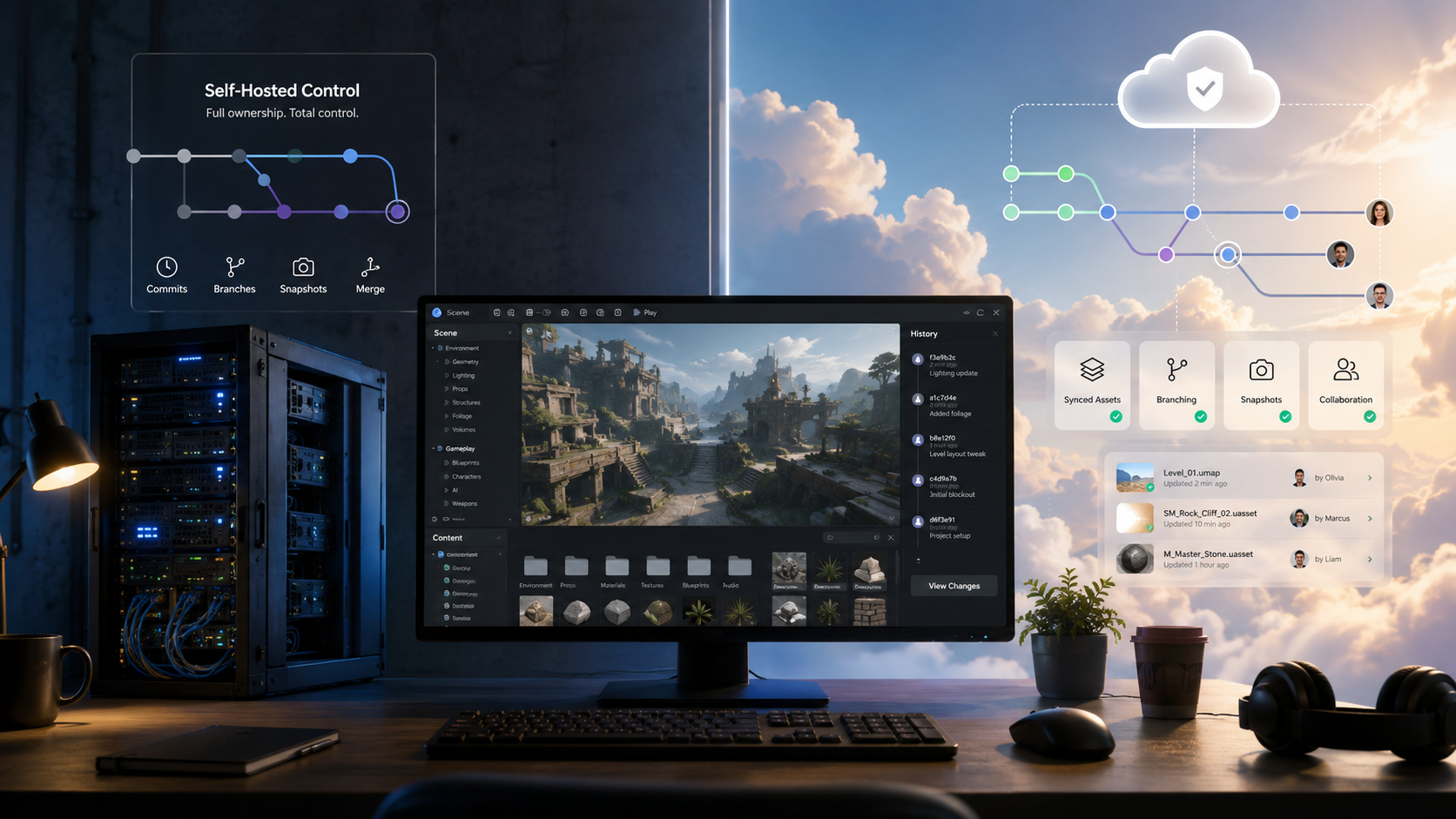
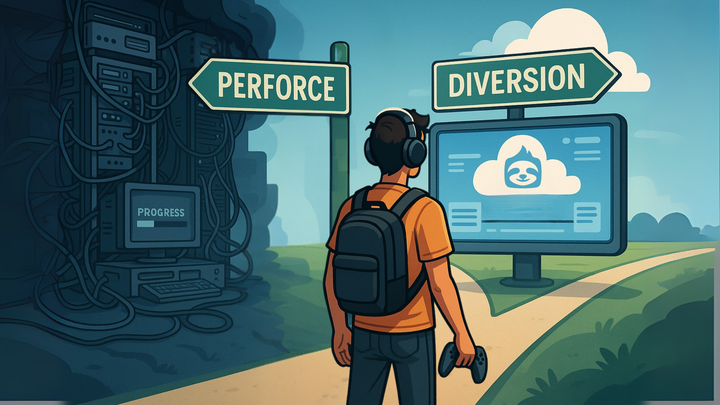
Mostly delivery model and maturity. Lore is open source and self-hosted, so you run the server yourself, and it's still ahead of its first stable release. Diversion is a fully managed, generally available service that teams run in production today, with no infrastructure to operate, dedicated support, and integrations for both Unreal Engine and Unity. Want full control and responsibility for your own stack? Lore is compelling. Want production-ready without the operational overhead? Go with Diversion.
How do they compare at AAA scale?
Both are built with scale in mind. In our internal benchmarking of current Lore builds, commit throughput eases off as history deepens, server-side merges slow under contention on a protected branch, and very large repositories can time out at staging. Diversion is engineered for deep-history, multi-million-file repositories and commits 400,000+ files in under 30 seconds.
Does Lore work with Unity?
Both Lore and Diversion work with any engine (or no engine). However, Lore doesn't offer any dedicated integrations yet. Diversion ships an Epic-recommended Unreal Engine plugin and a dedicated Unity Editor integration, plus Perforce/GitHub mirroring and a modern HTTPS API.
What does each cost to run?
Lore is free and open source to license, with the cost shifting to hosting, scaling, security, backups, and the effort to operate it yourself. Diversion is a predictable subscription with no infrastructure to buy and nothing to operate, so total cost of ownership stays predictable as your team grows.
Can I migrate to Diversion easily?
Yes. Diversion offers automated migration with hands-on support and a side-by-side, continuously synced transition, so you can move gradually and without risk. Many teams complete the move in days, not weeks.