
Version Control Built for Game Development
Cloud-native version control for game studios - one home for source code, large binary assets, and engine files, with native Unreal Engine and Unity integrations.
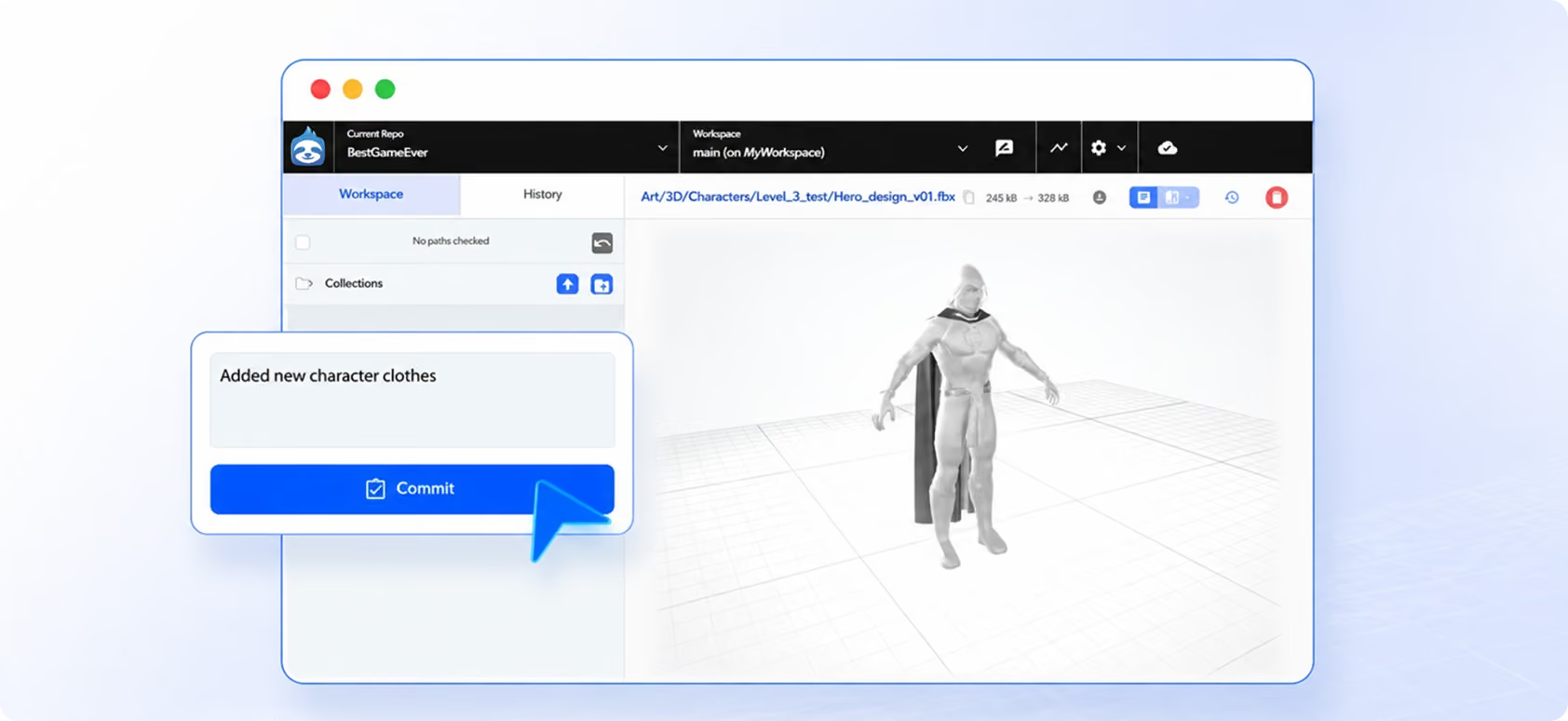

Why game studios outgrow traditional version control
Game projects are nothing like typical software projects
A single repository mixes code with assets, textures, 3D models, audio, and level data - thousands of binary files that legacy version control systems were never designed to handle. They can store it all, but only with dedicated servers, heavy admin overhead, and a steep learning curve that leaves artists locked out of the workflow. Diversion was built from the ground up to fix this: it versions your code and art assets in the same place, in the cloud, with no servers to install or maintain.
Scales to AAA-size projects
Proven on terabytes of data and thousands of contributors, with no file size limits. Textures, FBX models, audio banks, and engine formats live alongside your source code with full history.
One workflow for everyone
A modern UI that developers, artists, and designers actually want to use. Changes track automatically and sync to the cloud in real time.
Cloud-native, zero ops
Nothing to install or babysit. Get set up in minutes and let Diversion's cloud architecture carry the scale while your team focuses on making games.


Native engine integrations
Built into the tools your team already uses
Both plugins put live branch status, sync, and conflict-prevention alerts right inside the editor, with a lightweight, plug-and-play install. From there, each adds what's unique to its engine:

Diversion for Unreal Engine
- Updated assets reload automatically - no editor restarts
- UGS and Horde support for large-scale Unreal pipelines
- Manage revision control straight from the Content Browser

Diversion for Unity
- Color-coded file status - added, modified, deleted - in the Project window
- Selective commits and resets, with a confirmation step
- Open the desktop app for advanced operations in one click
Code & art, reviewed together
One place for developers and artists
Most version control was built for programmers and forces everyone else to adapt. Diversion gives both sides one tool they actually want to use:
- Unified reviews - approve a code change and a character model in the same tool
- Art previews - for image and model files
- Line-by-line annotate - shows who changed what, and when
- Real-time cloud sync - a stolen laptop or failed drive never costs you a sprint

Conflict prevention
Stop conflicts before they happen
Binary assets are a pain to merge, so the only good conflict is the one that never happens. Diversion keeps teams out of each other's way:
- Cross-branch alerts - the moment a teammate starts editing the same file
- Exclusive file locks - give unmergeable assets a single editor at a time
- Lightweight branching - runs features, experiments, and releases in parallel on repos with millions of files

Migration
Move off Perforce or Git LFS without disruption
Automated migration tools preserve your history, workflows, and custom tooling, backed by hands-on support. Run both systems side by side during the switch, and cut total cost of ownership by up to 70%.
From Perforce
- Automated migration, workflows preserved
- Run side by side with continuous sync for a gradual, risk-free switch
- Up to 70% lower total cost of ownership
From Git LFS
- Import directly when you hit Git's scale limits
- Keep repos in sync with GitHub mirroring
- Large assets and source code in one workflow
For studios of every size
Start free, scale to enterprise
Start with a free trial - no credit card required. Then pay monthly or annually, only for the seats you use.
Free to start
5 users and 100GB of storage, with no servers to budget for. Eligibility applies.
Growing teams
Adds code & asset reviews, hard locks, granular permissions, and CI/CD integrations.
AAA & large studios
On-premise, private cloud, or hybrid - the deployment control AAA productions want - with Okta and Active Directory support.
Get started in minutes
Install Diversion, create a repository, and invite your team - the quickstart takes about 2 minutes.

Frequently Asked Questions
Is Diversion built for game development teams?
Yes. Diversion is built for game development teams and creative production workflows. It supports projects that combine source code, large binary assets, game engine files, and complex team collaboration. Diversion includes features game teams need, such as large file support, branching, code and asset reviews, exclusive file locks, conflict-prevention alerts, and dedicated integrations for Unreal Engine and Unity. Its modern UI is designed to be accessible for both developers and artists working in the same repository.
Does Diversion handle large game assets like textures, models, and audio?
Yes. Diversion is designed for large binary assets — textures, 3D models, audio files, level data, and engine-specific formats — with no size limits or performance issues. Commits scale to 400,000+ files in under a minute.
Which game engines does Diversion work with?
Diversion works with Unreal Engine, Unity, Godot, and any other game engine — or without an engine at all. We are officially recommended by Epic Games as a version control solution for Unreal Engine, with a dedicated UE plugin and native Unity integration.
How does Diversion compare to Perforce for game studios?
Diversion is a modern Perforce alternative built for game studios that need scalable version control without heavy server management, complex admin work, or high infrastructure costs. Like Perforce, Diversion supports large files, binary assets, exclusive file locks, and game development workflows, but it adds a more modern cloud-based experience, faster onboarding, built-in code and asset reviews, conflict-prevention alerts, and dedicated Unreal Engine and Unity integrations. Diversion is also designed to be more scalable and cost-effective, helping teams reduce total version control costs by up to 70% compared to Perforce. It is easier for both developers and artists to use, while still supporting large repositories, complex projects, and enterprise deployment options such as cloud, private cloud, on-premises, or hybrid setups.
Can my game studio migrate from Perforce or Git LFS to Diversion?
Yes. Game studios can migrate from Perforce or Git LFS to Diversion. Diversion provides migration tools and hands-on support to help teams move their repositories, including large files, binary assets, and project history. For Perforce migrations, Diversion also supports bi-directional sync, allowing teams to run Diversion alongside Perforce during a gradual transition and reduce migration risk. Diversion is built to support both code and large assets in one scalable workflow, making it easier for studios to move away from legacy or Git LFS-based setups without disrupting development. To discuss a migration, contact us at hello@diversion.dev.
Does Diversion support indie game studios?
Yes. The Indie tier is free for the first 5 users (up to 20 users total) with 100GB free storage and up to 5 repositories. Eligibility applies. There's also an Education tier (free for up to 10 users) for student game-dev programs.